
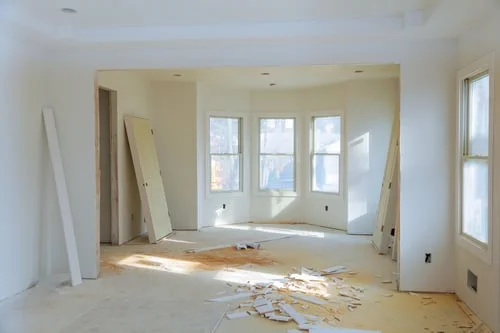
Renovation dust does not behave like household dust, and that single fact explains almost every complaint homeowners have about post-construction cleaning. Joint compound sanded off a wall breaks into particles fine enough to hang in still air for hours. You can clean a room to a shine at four in the afternoon and find a visible grey film on the windowsill the next morning, having done nothing wrong. A proper post-construction clean is therefore not one long day. It is a sequence of passes with settling time between them, and knowing that up front changes how you schedule the entire handover. Budget the calendar for it, not only the invoice.
Pass One: Rough Clean, While Trades Still Come and Go
The first pass exists to get bulk material out of the building. Debris, offcuts, packaging, protective floor coverings and masking all come out. Adhesive labels on windows, appliances and fixtures get removed while they are still fresh, before another week of sun bakes them on. Paint spatter, joint compound splashes and caulk smears are scraped off floors, glass and hardware. Everything then gets vacuumed with a HEPA machine, working ceiling to floor and including the wall surfaces themselves, because drywall dust clings to flat paint and will drop later if you skip it. This pass is not a finish; it is a reset.
The Settling Gap Is Part of the Job
After the rough pass, the building needs time. Fine gypsum dust disturbed by vacuuming and foot traffic has to fall out of the air, and more of it keeps migrating out of wall cavities, recessed light housings, HVAC boots and the tops of door casings for days afterward. Replace the HVAC filter before running the system, or you will simply circulate what you just removed. Anyone promising a single-visit final clean the same afternoon the drywall crew packs up is promising something the physics will not support, and the homeowner is the one who discovers that. Keep the space closed up and let it settle.
Pass Two: Detail, Top to Bottom, Twice Where It Counts
The detail pass is where a space actually becomes clean. Full HEPA vacuum again from ceilings down, then wet wiping of every surface with frequently changed water and clean microfiber, because dust plus water makes paste and dry removal always comes first. Cabinets and drawers get cleaned inside as well as out, then checked again at the end, since settling dust finds its way into anything left open. Vent covers come off. Light fixtures get wiped inside the glass. Window tracks get vacuumed with a crevice tool before anything damp goes near them. Door tops, closet shelves and every switch plate get the same treatment.
- Skip the razor blade on new glass, which often scratches from fabricating debris
- Use grout haze remover inside the window the tile manufacturer specifies, not after
Pass Three: The Punch-List Clean
The final pass happens after the last trade leaves, never before. Touch-up painters, electricians setting trim plates and plumbers seating fixtures all reintroduce dust and fingerprints, so any clean done ahead of them gets partly undone. This pass is glass, mirrors, polished fixtures, hardware, appliance faces and floors, plus a check that new hardwood finish has passed the cure time the finisher specified before anything wet touches it. Inspect with a work light raked low across each surface, because flat overhead lighting hides the film that raking light shows instantly. In older North Jersey homes, plaster dust from lath demolition is heavier and grittier than modern drywall dust.
What a Proper Handover Looks Like
A handover is a document, not a handshake. Walk the space room by room against a written scope, note anything still outstanding, confirm the HVAC filter was replaced, confirm every protective film is off the appliances and glass, and photograph the finished condition before any furniture arrives. Agree in advance who pays for a re-clean if trades come back after sign-off, because on a busy project somebody usually does. That single line in the scope prevents most of the arguments that happen at the end of a renovation.
Building logistics matter nearly as much as the cleaning itself. For projects in Jersey City, Hoboken or Newark condo buildings, sort the certificate of insurance, elevator reservation and dumpster or parking permits before the crew arrives, and budget for the stairwell and corridor outside the unit, because in a walk-up the dust travels well past your own front door. Scarlet Cleaning Services handles multi-pass post-construction work for homeowners, contractors and property managers across Hudson, Bergen, Essex, Union and Passaic Counties, and quotes are free.